


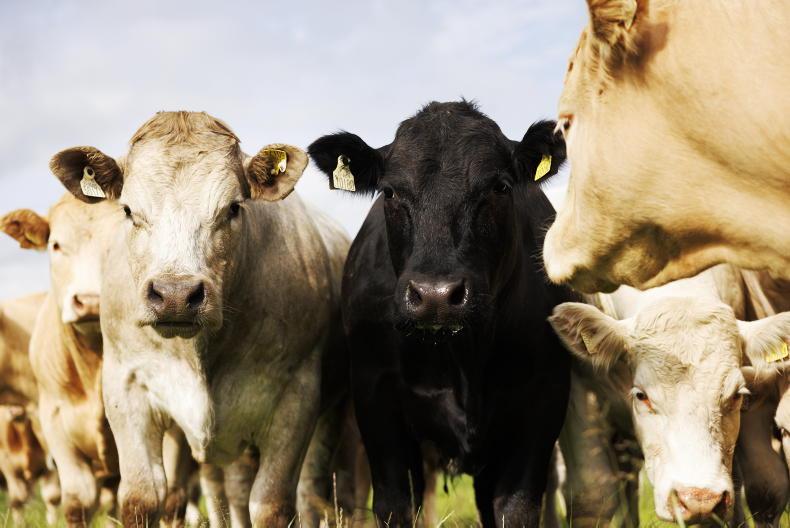
The Beef HealthCheck programme may not be a household name to suckler and beef farmers reading this article at their kitchen table or on their phone.
However, many farmers will recognise its main outcome: the factory health reports returned with each batch of finished animals, which have been in place over the last 10 years.
A decade on from the start of the programme, more than one million reports have been delivered to 64,000 farmers across the country, putting cattle health information back into farmers’ hands, which would otherwise be lost.
Behind the impressive figure of 7.7 million cattle assessed, lies the more impressive feat of a long-standing goodwill initiative between multiple partners in the cattle industry.
Seventeen processing factories are currently participating in the Animal Health Ireland (AHI) programme, supported by the leadership of Meat Industry Ireland (MII), covering approximately 65% of the national kill.
Temporary veterinary inspectors (TVIs), providing a crucial independent function to ensure safe meat products, are the unassuming core of the programme, collecting the health information.
The TVIs themselves are often local veterinarians and so understand the value of health conditions seen at slaughter in general disease surveillance.
But while the granularity of surveillance data usually disappears into anonymised summaries, the programme provides a practical feedback facility for individual animal information to aid farm-level decision-making.
Liver fluke burden, active infection, liver abscesses and pneumonia pathology, all visible at post-mortem and often invisible on the farm, are captured, structured and returned to farmers directly and made available through ICBF.
Benchmarking against county and national averages makes individual herd performance meaningful in context and is freely accessible to farmers and their veterinarians when logged onto ICBF.
The integration of Beef HealthCheck data into the ICBF breeding evaluations adds a further dimension.
Selecting for genetic resistance to liver fluke will result in a slow shift towards generational resilience.
Nationally, trends emerge when we have the benefit of analysing a dataset that is unique among our European counterparts. Liver fluke levels have decreased nationally to less than one-third of the levels at the start of the programme.
Benchmarking against county and national averages makes individual herd performance meaningful in context and is freely accessible to farmers and their veterinarians when logged onto ICBF
These have stabilised in recent years at around 8% of cattle showing evidence of infection, bar 2024 ,which saw a small increase following wet conditions the previous year. Active infections make up only 1.2% of these cases. Liver abscess and pneumonia levels have remained at stable low rates through the years.
For the farmer and their veterinarian, this information translates into objective, herd-specific evidence to anchor parasite management discussions that might otherwise rely on habit or commercial pressure.
For example, active infection of liver fluke parasites at processing implies an absence of treatment or that the treatment given has been unsuitable or ineffective, often due to the timing of the treatments.
Further, a large number of herds in Ireland are affected by liver fluke (50% in 2025), but the number of animals within a herd is usually low.
Parasites are unavoidable due to the grass-based grazing system that makes Irish beef a quality and in-demand product
This implies that blanket anthelmintic use may not be needed in many herds and the data shows that 11% of herds have no evidence of liver fluke. These then are avenues to explore to improve parasite management on-farm, while leaning towards responsible anthelmintic usage.
Parasites are unavoidable due to the grass-based grazing system that makes Irish beef a quality and in-demand product.
The sustained low levels of liver fluke nationally point to a collection of farm-specific decisions, relating to effective treatment and management.
These decisions have been underpinned by individualised data and the supporting educational messaging promoted by industry, local veterinarians and advisory services, such as on knowledge transfer farm-walks and other activities.
While the programme is aware of its own limitations, such as the unavoidable delay between infection and feedback, it remains an important model for future expansion into reporting other health conditions. As the programme enters its second decade, the infrastructure is in place to continue supporting evidence-based decision-making on-farm, to help farm families and the industry as a whole.
Ultimately, the programme lends its success to meat factories, MII, TVIs, farmers, veterinarians, ICBF, DAFM and AHI, that have each maintained their commitment despite varying challenges through the years to the benefit of healthy animals.
It is amazing to think what the industry has achieved in the last decade, we are now well-placed to look forward to the next decade on a journey of animal health, with the Beef HealthCheck at the centre.



SHARING OPTIONS